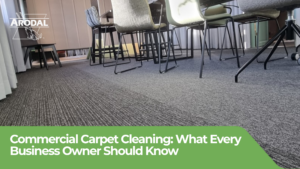
Commercial carpets take a beating. Every employee who walks in from a rainy morning, every customer who tracks in parking lot grit, every spilled coffee in the break room —it all ends up in the fibers. For Washington businesses specifically, the combination of wet winters, muddy entryways, and near-constant moisture tracking makes carpet care a real operational concern, not just a cosmetic one. This guide covers everything you need to know about commercial carpet cleaning: what it is, why it matters, and when to call a professional.
Key Takeaways
- Commercial carpet cleaning goes well beyond vacuuming and requires professional methods matched to your facility’s traffic and carpet type
- Washington’s rainy climate accelerates carpet degradation and moisture-related odor issues, making regular professional cleaning more important locally
- Five main cleaning methods exist for commercial settings, and the right one depends on your carpet, soil level, and how much downtime you can tolerate
- High-traffic businesses should schedule professional cleaning at least quarterly; some industries warrant monthly service
- Visible traffic lanes, recurring odors, and post-vacuuming dullness are reliable signals that professional cleaning is overdue
What Is Commercial Carpet Cleaning?
Commercial carpet cleaning is professional soil removal and maintenance for carpets in business environments. It’s distinct from basic vacuuming, which only captures surface debris, and from residential cleaning, which is designed for lighter use patterns.
In a commercial setting, carpets face daily, concentrated foot traffic, repeated moisture exposure, food and beverage spills, and tracked-in contaminants from parking lots and sidewalks. Professional commercial carpet cleaning addresses all of that through specialized methods: hot water extraction, encapsulation, bonnet cleaning, dry cleaning, and shampooing. It also includes targeted services like stain treatment, odor control, and ongoing maintenance planning. The goal isn’t just a cleaner carpet. It’s a carpet that lasts longer, performs better, and doesn’t become a liability.
Why Commercial Carpet Cleaning Matters for Your Business
Carpets function like a filter because they trap dirt, allergens, dust, moisture, and debris before those particles circulate through your facility. That’s actually useful, up to a point. When the filter gets overloaded and isn’t maintained, it stops functioning as one and starts contributing to the problems it was meant to contain.
- Indoor Air Quality and Health
Carpets can accumulate significant amounts of dirt, dust, and debris well before any visible soiling appears on the surface — which is why waiting until carpet looks dirty is already too late. In a humid, wet-weather state like Washington, moisture retention in carpet fibers also creates conditions for mold and mildew growth, both of which directly affect indoor air quality. - Employee Productivity and Comfort
Employees spend hours in your facility. A space that smells stale, looks grimy, or triggers allergy symptoms affects concentration and morale. Regular carpet cleaning supports a healthier environment, and a healthier environment supports a more productive team. - Brand Perception and First Impressions
A client or customer who walks into your space notices the floors. Worn, stained, or odorous carpet signals neglect. Well-maintained carpet signals that you pay attention to your environment, which extends naturally to how you manage your business. - Safety and Risk Management
Wet or dirty carpet creates slip hazards. In Washington, where rain-soaked entrances are a reality for much of the year, entry-area carpet maintenance is a basic risk management measure. Saturated carpet near doorways can also accelerate structural moisture issues if it’s not cleaned and dried properly. - Asset Protection and Lifecycle Cost
Commercial carpet is a significant capital investment. According to the Institute of Inspection, Cleaning and Restoration Certification (IICRC), regular professional maintenance can extend carpet life by three to five years compared to vacuuming alone. Replacing a commercial carpet installation often costs tens of thousands of dollars. Cleaning costs a fraction of that.
Carpet Cleaning Methods Used in Commercial Settings
No single cleaning method is best for every business. The right approach depends on carpet type, soil level, foot traffic, how long the area can be out of service, and your overall maintenance program. Here’s how the main options compare.
Hot Water Extraction
Hot water extraction, often called steam cleaning, injects hot water and cleaning solution deep into carpet fibers, then vacuums it out along with the loosened soil. It’s the most thorough method available for removing embedded dirt, allergens, and heavy soiling. The IICRC recommends hot water extraction as the primary restorative method for commercial carpets. The tradeoff is drying time, typically 6 to 24 hours depending on airflow and humidity. For Washington businesses, scheduling extraction during low-humidity periods or over a weekend helps manage downtime.
Encapsulation Cleaning
Encapsulation applies a chemical solution that surrounds soil particles and crystallizes around them as it dries, making them easy to vacuum away. It dries faster than hot water extraction, often within 30 to 60 minutes, making it a practical option for offices and facilities that can’t tolerate extended closures. It works well as part of a regular maintenance program and keeps carpets looking clean between deeper restorative cleanings.
Bonnet Cleaning
Bonnet cleaning uses a rotating absorbent pad to scrub the surface of the carpet. It’s a fast, low-moisture method that improves appearance quickly in high-traffic areas like hotel lobbies, corridors, and retail spaces. It doesn’t remove deep soil, so it works best as an interim maintenance step, not as a substitute for periodic extraction.
Dry Carpet Cleaning
Dry cleaning uses minimal moisture, typically a powder or compound worked into the carpet and then vacuumed out. It’s useful for businesses that need near-immediate reopening or for moisture-sensitive environments where prolonged dampness would cause problems. It’s less effective on heavily soiled carpets that need deep extraction.
Carpet Shampooing
Shampooing applies a detergent solution with mechanical agitation. It can address visible soil effectively but may leave residue if not properly rinsed. Most modern commercial cleaning programs favor encapsulation or extraction over shampooing, particularly for heavy-use facilities, because residue buildup can actually attract dirt faster over time.
How Often Should Washington Businesses Clean Their Carpets?
Cleaning frequency depends on foot traffic, industry, carpet construction, weather exposure, and whether your facility is customer-facing. Washington’s rainy season adds a variable most other states don’t have to think about as consistently: moisture and debris tracked in from outside accelerate soiling in entry areas and require more frequent attention to those zones specifically.
| Business Type | Recommended Frequency |
|---|---|
| Medical and dental offices | Monthly to every 6 weeks |
| Schools and childcare facilities | Monthly to quarterly |
| High-traffic retail | Monthly to every 6 weeks |
| Corporate offices (moderate traffic) | Every 3 to 4 months |
| Low-traffic professional offices | Every 6 months |
| Gyms and fitness facilities | Every 4 to 6 weeks |
| Churches and event spaces | After major events; quarterly minimum |
| Warehouses and industrial | Annually or as needed |
Entry areas, hallways, and common spaces typically need attention more frequently than private offices or low-traffic zones within the same facility. During Washington’s wet months, October through March, consider increasing entry-area cleaning to prevent moisture-driven odor and mildew issues from taking hold.
Signs Your Commercial Carpet Needs Professional Cleaning
Some of these are obvious. Others accumulate gradually and are easy to ignore until they become a bigger problem.
Visible traffic lanes, where the carpet looks noticeably darker or flattened along the paths people walk most often, are a clear signal the soil load has exceeded what routine vacuuming can handle. Stains that keep returning after spot treatment usually mean the residue has wicked back up from below the surface and needs extraction to fully clear. Lingering odors, especially musty or sour smells that show up after wet weather, point to moisture embedded in the carpet or pad. Dull or matted fibers that don’t respond to vacuuming indicate deep soil and fiber compression. Increased allergy complaints from staff can trace back to particulate buildup in carpet fibers. Sticky or crunchy texture, often caused by cleaning residue or spilled beverages that weren’t fully treated, actually attracts more soil and worsens over time.
If carpet looks dirty again within days of vacuuming, that’s not a vacuuming problem. That’s a deep-soil problem that only extraction can address.
How to Choose the Right Commercial Carpet Cleaning Company
Start with experience in your specific type of facility. A company that primarily handles residential jobs may not carry the equipment, methods, or capacity to properly service a large commercial property. Ask about their approach to different carpet types and what methods they use for facilities similar to yours.
Verify that the company uses industry-standard methods and professionally trained staff. Certifications from the IICRC are a reliable indicator of professional-level training. Ask specifically what cleaning products they use and whether they offer Green Seal-certified options. For businesses with employees or customers sensitive to chemical exposure, green-certified products reduce risk.
References matter. Ask for documented experience with commercial clients in your industry. A company that has been serving Seattle-area businesses for decades will understand the local moisture and soil conditions that affect commercial carpets here in ways a newer operation simply won’t.
Arodal has provided commercial cleaning services to Seattle and Puget Sound businesses for over 50 years. Our cleaning services include professional carpet care using methods and products matched to your facility’s specific needs, including Green Seal certified options. Our team is responsive and accountable, with real-time manager access and 24/7 real-person response, so you’re never chasing someone down when you have a concern.
Frequently Asked Questions
1. How often should commercial carpets be professionally cleaned?
Most commercial carpets benefit from professional cleaning every one to three months, depending on foot traffic, industry, and environmental exposure. High-traffic businesses like medical offices, gyms, and retail spaces typically need cleaning every four to six weeks. Low-traffic professional offices can often manage with semi-annual service. Washington businesses should account for heavier entry-area soiling during the wet season and adjust frequency accordingly.
2. What is the difference between hot water extraction and encapsulation for commercial carpets?
Hot water extraction injects hot water and solution deep into carpet fibers and extracts it along with loosened soil. It provides the deepest clean available but requires longer drying time, typically 6 to 24 hours. Encapsulation applies a crystallizing chemical that surrounds soil particles for easy vacuuming, dries in 30 to 60 minutes, and works well as a maintenance method between restorative cleanings. Many commercial programs use encapsulation regularly and hot water extraction periodically.
3. How long does commercial carpet take to dry after cleaning?
Drying time depends on the method used, airflow, humidity, and carpet construction. Hot water extraction typically takes 6 to 24 hours. Encapsulation dries in 30 to 60 minutes. Dry cleaning methods allow near-immediate use. Increasing ventilation, using fans, and scheduling cleaning during lower-humidity periods all reduce drying time. In Washington’s wetter months, drying time may run longer than in drier conditions.
4. Can commercial carpet cleaning remove odors?
Yes, in most cases. Professional cleaning removes the soils, moisture, and biological material that cause odors at the source. Hot water extraction is particularly effective for odor removal because it reaches deep into fibers and the carpet pad where odor-causing particles accumulate. Some situations, such as significant pet contamination or mold growth, may require additional treatment or deodorizing products. Persistent musty odors after wet weather often indicate moisture in the carpet pad that needs extraction, not just surface cleaning.
5. How do I know if my carpet needs replacement instead of cleaning?
Cleaning is typically the right call when odors, stains, and soil are the primary concerns and the carpet structure is intact. Replacement becomes necessary when fibers are severely worn or matted past recovery, when backing is deteriorating, when subfloor moisture damage has compromised the carpet pad, or when staining or water damage is too extensive for cleaning to address. A professional assessment can tell you which situation you’re in. In some cases, targeted replacement of a high-traffic section alongside cleaning of the remainder is more cost-effective than full replacement.
Final Thoughts
Commercial carpet care comes down to two things: the right method applied at the right frequency. Get those two variables right and your carpet lasts longer, your facility looks and smells better, and you’re managing risk rather than reacting to it. For Washington businesses, the wet climate adds urgency to that equation. Moisture tracked in from outside doesn’t stay at the door.
Arodal brings over 50 years of experience cleaning commercial facilities across Seattle and the Puget Sound region. Our veteran-owned team understands what commercial environments actually demand. If your carpets are overdue, or if you want to build a maintenance program that stays ahead of the problem, contact us today for a free cleaning quote.